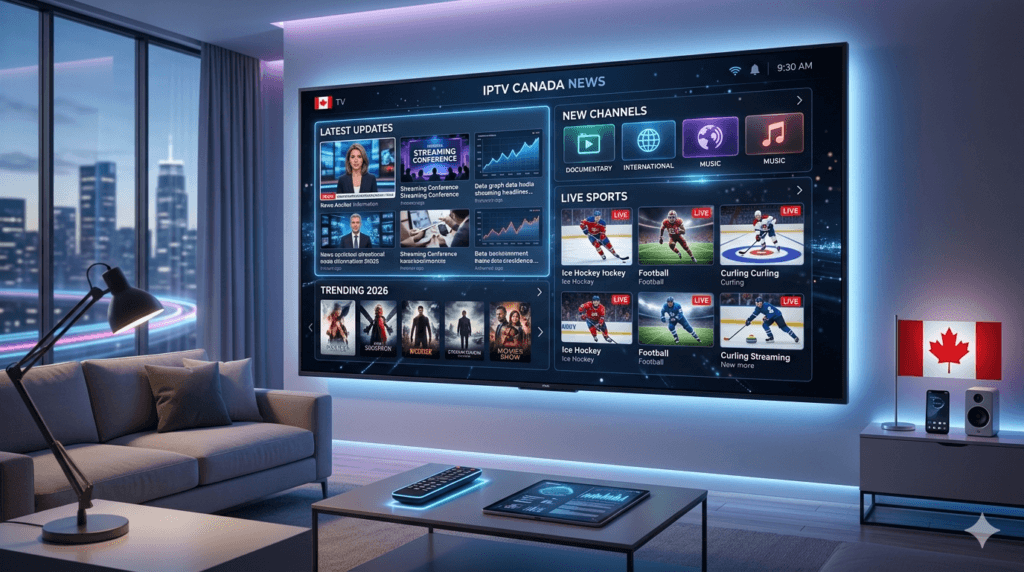
The landscape of television in the Great White North has undergone a radical transformation. As we navigate through 2026, IPTV Canada has transitioned from a niche alternative to the primary way millions of households consume media. With the decline of traditional satellite and the rising costs of cable bundles, Canadians are looking for more flexible, tech-forward solutions. Staying informed with the latest news and updates in this sector is no longer just for tech enthusiasts; it is essential for every consumer wanting the best value for their entertainment dollar.
In this deep dive, we explore the current state of streaming in the country, the technological breakthroughs defining the year, and the news that is shaping how we watch everything from local hockey to international cinema.
WHATSAPP CONTANCT : +33756758551
Introduction to IPTV Canada and Why It’s Growing
The growth of IPTV Canada is driven by a unique combination of high-speed internet infrastructure and a consumer base that is increasingly “cord-never”—younger generations who have never owned a traditional cable box. Canada now boasts some of the most stable fiber-optic networks in the world, providing the perfect backbone for high-bitrate streaming.
Beyond hardware, the shift is cultural. Canadians want curated experiences. They want to switch from a French-language news broadcast in Quebec to a live cricket match in the UK, then finish the night with a Hollywood blockbuster in 4K—all within a single interface. This desire for “everything-under-one-roof” is what has propelled IPTV to the forefront of the national conversation.
Latest News About IPTV Canada in 2026
The year 2026 has been a landmark for the industry. One of the most significant pieces of IPTV news this year involves the integration of Artificial Intelligence into user interfaces. Leading providers are now using AI to predict viewing habits with 95% accuracy, creating “Live Channels” tailored specifically to individual users.
Another major update involves regulatory clarity. The CRTC (Canadian Radio-television and Telecommunications Commission) has introduced new frameworks that encourage healthy competition among digital distributors, leading to better pricing for the average consumer. To stay updated on these shifting regulations and provider changes, check out our dedicated [latest IPTV updates] page for daily briefings.
Table 1: IPTV Trends Evolution (2024 vs. 2026)
| Trend | 2024 Status | 2026 Status |
| Standard Quality | 1080p (FHD) | 4K (UHD) is the baseline |
| User Interface | Grid-based EPG | AI-Driven Personalized Hubs |
| Buffering | Common during peak sports | Virtually eliminated (Edge Computing) |
| VR/AR Support | Experimental | Integrated “Stadium View” for sports |
| Voice Control | Basic commands | Full conversational AI integration |
New Channels and Content Updates
In the world of IPTV Canada, content is king. 2026 has seen an influx of “FAST” channels (Free Ad-supported Streaming TV) being integrated into premium IPTV lineups. This allows users to access niche content—such as 24/7 classic Canadian sitcoms or regional hiking documentaries—without additional costs.
New Additions to the Canadian Lineup:
- Regional Hyper-Local News: New feeds providing street-level news for cities like Kelowna, Guelph, and Sherbrooke.
- International Sports Expansion: Exclusive rights for emerging leagues in Padel and E-sports are now standard in most sports packages.
- Multicultural Packages: Massive updates to Punjabi, Mandarin, and Tagalog libraries, reflecting Canada’s diverse population.
Sports, Movies, and Series News
For many Canadians, sports are the primary reason to maintain a TV subscription. The latest news in 2026 centers around the “Multiview” feature. During the NHL playoffs or NBA finals, IPTV users can now watch up to four different camera angles or four different games simultaneously on one screen without a drop in frame rate.
Movies and VOD Trends
The Video On Demand (VOD) libraries in IPTV Canada have expanded significantly. Major studios are now experimenting with “Day-and-Date” releases on premium IPTV VOD platforms, allowing users to rent theatrical releases the same day they hit cinemas in Toronto or Vancouver.
Technology Improvements (4K, Anti-Buffering)
The technical news that has users most excited is the widespread adoption of AV1 Encoding. This technology allows for 4K streaming using 30% less bandwidth than previous years, making UHD content accessible even to those in more rural parts of the country where internet speeds might be lower.
Anti-Buffering 2.0
Modern IPTV Canada services now utilize “Edge Server” technology. By caching popular live content (like a Super Bowl or a Federal Election broadcast) on servers located physically closer to Canadian cities, the latency is reduced to near-zero. This ensures that when your neighbor cheers for a goal, you see it at the exact same time on your screen.
IPTV Canada vs. Traditional TV
The battle between traditional cable and IPTV Canada has reached a tipping point. Traditional providers are increasingly moving their own services to an IPTV-based delivery model to compete.
Table 2: Features Comparison (2026)
| Feature | Modern IPTV | Traditional Cable |
| Installation | App-based (5 minutes) | Technician visit / Hardwiring |
| Contract | Month-to-month | Often 1–2 years |
| Hardware | Use your own (Firestick/Smart TV) | Proprietary rental box |
| International Content | Unlimited global access | Very limited / Expensive add-ons |
| Portability | Watch on phone, tablet, or TV | Limited to home or specific apps |
User Experience and Streaming Trends
The latest IPTV updates aren’t just about what we watch, but how we watch it. In 2026, “Social Streaming” has become a major trend. Users can now create private “Watch Parties” within their IPTV app, allowing them to video chat with friends across the country while watching the same movie or game in sync.
- Customizable Dashboards: Users can now pin their favorite sports teams or news topics to the home screen.
- Eco-Mode: New streaming protocols that reduce the energy consumption of Smart TVs and streaming sticks.
- Haptic Integration: For mobile users, subtle vibrations during sports events (like a goal or a heavy hit) provide a more immersive experience.
Devices Compatibility
One of the strengths of IPTV Canada is its versatility. You are no longer tethered to a living room couch.
Table 3: Device Compatibility 2026
| Device Category | Recommended Apps | Connection Method |
| Streaming Sticks | Firestick, Chromecast 2026 | Wi-Fi 6 / Ethernet |
| Smart TVs | Samsung, LG, Android TV | Native App |
| Mobile | iOS, Android | 5G / 6G Ready |
| Gaming Consoles | PlayStation 6, Xbox Series X/S | Native Store Download |
| Computers | Windows 11/12, macOS | Web Player / Dedicated App |
Future of IPTV Canada
Looking beyond 2026, the news suggests an even deeper integration of Augmented Reality (AR). Imagine wearing a pair of lightweight AR glasses and seeing player stats floating next to the TV while you watch a live Raptors game.
The future of IPTV Canada is also green. Providers are moving toward carbon-neutral data centers, ensuring that our binge-watching habits have a minimal impact on the environment. As internet satellite constellations (like Starlink) continue to improve, even the most remote cabins in the Yukon will have access to the same 4K IPTV Canada content as downtown Toronto.
FAQ Section
1. Is IPTV legal in Canada?
Yes, IPTV is a technology used by many licensed providers like Bell and Rogers. There are also many legal third-party services. Always ensure your provider has the necessary rights to the content they distribute.
2. What internet speed do I need for 4K in 2026?
Thanks to new compression technologies like AV1, a stable 25 Mbps connection is usually sufficient for a single 4K stream, though 50 Mbps is recommended for households with multiple users.
3. Can I use my IPTV subscription when traveling outside Canada?
Most IPTV Canada services are portable, but some local channels may be geo-restricted. Using a VPN is a common way for travelers to maintain access to their local home news.
4. Do I need a new TV to get these updates?
No. Most updates are software-based. As long as you have a modern streaming device (like a Firestick or a Smart TV from the last 5 years), you can enjoy the latest features.
5. How do I get the latest IPTV news?
The industry moves fast. You can stay informed by following technology blogs and checking our [IPTV news] section regularly for the latest industry shifts.
6. Is there a difference between “Free” and “Paid” IPTV?
“Free” services are often ad-supported (FAST) and offer limited content. Paid services provide premium channels, VOD libraries, and better stability (anti-buffering).
Conclusion
The evolution of IPTV Canada is a testament to the country’s appetite for innovation and high-quality entertainment. From the latest news about AI-driven interfaces to the updates in 4K delivery and international sports rights, the industry is more vibrant in 2026 than ever before.
As we look forward, the distinction between “the internet” and “the television” will continue to blur until they are one and the same. Whether you are looking for the latest global news, the most immersive sports experience, or an endless library of movies, IPTV Canada provides a tailored, affordable, and high-tech solution for the modern home. Stay tuned to our latest IPTV updates to ensure you are always at the cutting edge of this streaming revolution.